
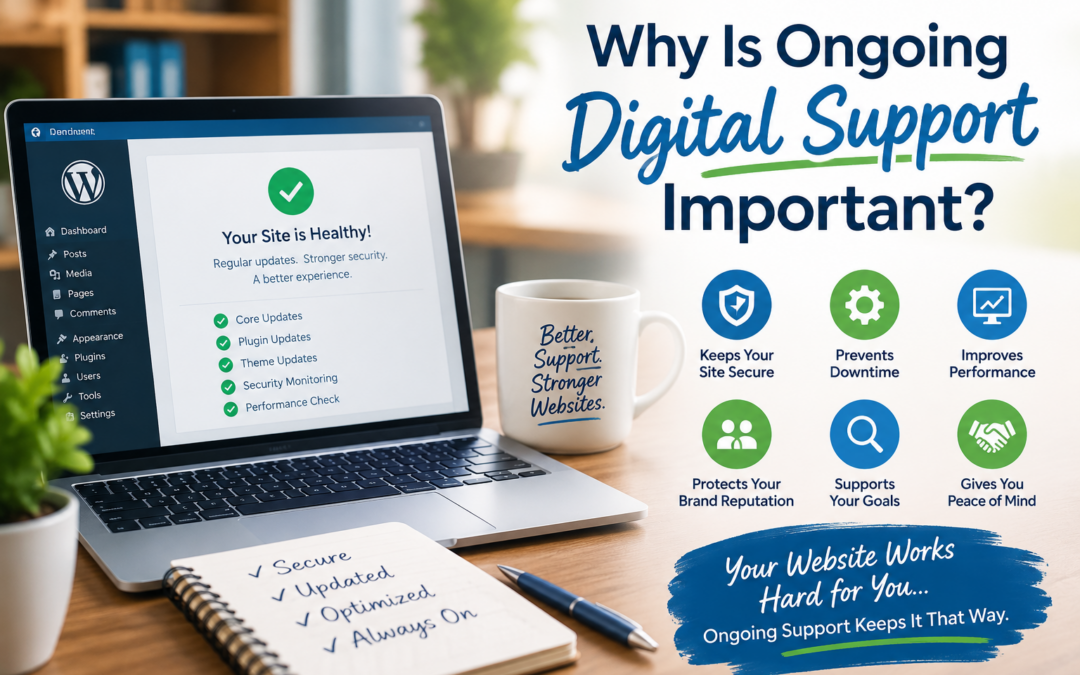
Why Is Ongoing Digital Support Important?
In a world where digital experiences shape trust, credibility, and engagement, your website and digital platforms are never truly “finished.” They evolve alongside technology, user expectations, security threats, and your organization’s mission. Yet many organizations still treat their digital presence as a one-time project—build it, launch it, and move on.
This mindset creates risk.
Ongoing digital support is not about fixing what’s broken. It’s about protecting what works, strengthening what matters, and ensuring your digital platform continues to serve your audience effectively. Whether you’re a nonprofit, faith-based organization, or growing business, ongoing digital support is essential to sustainability, security, and growth.
Digital Platforms Are Living Systems
Websites and digital platforms are not static assets. They rely on:
-
Software updates
-
Third-party integrations
-
Hosting infrastructure
-
User data and interactions
Each of these components changes over time. Without active support, even a well-built platform slowly degrades.
Outdated software creates vulnerabilities.
Unmonitored performance frustrates users.
Unnoticed errors erode trust.
Ongoing digital support ensures your platform remains healthy—not just functional.
Security Threats Never Stop Evolving
One of the most critical reasons for ongoing digital support is security.
Cyber threats are no longer rare or targeted only at large organizations. Automated attacks scan the web constantly, looking for:
-
Outdated plugins or libraries
-
Weak passwords
-
Unpatched systems
-
Misconfigured servers
Nonprofits and faith-based organizations are especially vulnerable because they often lack dedicated IT teams.
Ongoing digital support provides:
-
Continuous security monitoring
-
Regular updates and patching
-
Malware scanning and removal
-
Access control and login protection
Security isn’t something you “set once.” It requires constant vigilance.
Downtime Is More Costly Than Most Organizations Realize
When a website goes down, the impact extends far beyond inconvenience.
Downtime can result in:
-
Lost donations or registrations
-
Missed communication opportunities
-
Damaged credibility
-
Reduced search engine trust
-
Frustrated staff and users
Without ongoing digital support, downtime often goes unnoticed until someone complains. Support plans with uptime monitoring and rapid response ensure problems are detected and resolved quickly—often before users ever notice.
Regular Updates Prevent Bigger, More Expensive Problems
Software updates are one of the most overlooked aspects of digital maintenance.
Updates address:
-
Security vulnerabilities
-
Performance issues
-
Compatibility changes
-
Bug fixes
Delaying updates may feel safer, but it increases risk over time. When updates pile up, applying them becomes more complex and dangerous.
Ongoing digital support ensures updates happen:
-
Regularly
-
Safely
-
With testing and rollback options
This reduces the likelihood of catastrophic failures and emergency repair costs.
Performance Directly Affects Engagement and Trust
Users expect fast, smooth, and reliable digital experiences.
Slow load times or broken features lead to:
-
Higher bounce rates
-
Lower engagement
-
Decreased conversions
-
Negative perceptions
Ongoing digital support includes performance monitoring and optimization to:
-
Improve page speed
-
Identify bottlenecks
-
Optimize hosting and assets
-
Ensure mobile responsiveness
Performance is not just technical—it’s experiential.
Digital Support Protects Your Mission and Message
For nonprofits and faith-based organizations, digital platforms are often mission-critical.
They support:
-
Giving and fundraising
-
Event registrations
-
Educational content
-
Community engagement
-
Communication and outreach
When digital systems fail, the mission suffers.
Ongoing digital support ensures your message remains accessible, consistent, and effective—especially during critical campaigns or seasons.
Backup and Recovery Are Non-Negotiable
Even with the best security, things can go wrong:
-
Human error
-
Failed updates
-
Hosting issues
-
Cyber incidents
Without reliable backups, recovery can be slow—or impossible.
Ongoing digital support includes:
-
Automated backups
-
Secure off-site storage
-
Regular backup verification
-
Clear restoration processes
Backups turn worst-case scenarios into manageable setbacks.
Support Reduces Internal Stress and Burnout
When organizations lack digital support, technical issues often fall to:
-
Staff members without technical expertise
-
Volunteers
-
Leadership teams
This creates stress, distraction, and inefficiency.
Ongoing digital support provides:
-
A clear point of contact
-
Professional troubleshooting
-
Predictable response times
Your team can focus on their actual roles—rather than firefighting technology problems.
Accessibility and Compliance Require Continuous Attention
Digital accessibility is not a one-time checklist. Content changes, new pages, and software updates can introduce accessibility issues over time.
Ongoing digital support helps:
-
Maintain accessibility best practices
-
Identify and address compliance risks
-
Improve usability for all users
Accessible platforms reflect care, inclusion, and professionalism.
SEO and Visibility Depend on Technical Health
Search engines favor websites that are:
-
Fast
-
Secure
-
Well-maintained
-
Error-free
Technical issues like broken links, crawl errors, or slow performance can quietly harm your visibility.
Ongoing digital support helps maintain:
-
Clean site structure
-
Healthy indexing
-
Redirect management
-
Technical SEO best practices
Support protects the digital foundation your content depends on.
Digital Support Encourages Proactive Improvement
Without ongoing support, organizations often remain stuck in maintenance mode—reacting to issues instead of improving.
Good digital support includes:
-
Strategic recommendations
-
Platform improvement insights
-
Tool and integration suggestions
-
Growth-focused guidance
This turns digital support into a strategic asset, not just a safety net.
Transparency Builds Confidence and Trust
Ongoing digital support should include regular reporting and communication.
This provides:
-
Visibility into work performed
-
Awareness of platform health
-
Confidence in security and stability
-
Clear recommendations for next steps
Transparency builds trust between organizations and their support partners—and with leadership and stakeholders.
Ongoing Support Saves Money Over Time
While digital support may feel like an added cost, it actually reduces long-term expenses by:
-
Preventing emergencies
-
Avoiding rebuilds
-
Extending platform lifespan
-
Reducing downtime losses
Emergency fixes are almost always more expensive than proactive care.
The True Cost of “No Support”
Organizations without ongoing digital support often experience:
-
Repeated site failures
-
Growing security risks
-
Increasing technical debt
-
Loss of institutional knowledge
-
Declining user trust
The absence of support doesn’t eliminate cost—it simply delays it until the damage is greater.
Choosing the Right Ongoing Digital Support Partner
Not all support is equal.
Look for providers who:
-
Offer proactive monitoring
-
Emphasize security and backups
-
Communicate clearly
-
Respect your platform’s architecture
-
Align with your mission and goals
Digital support works best as a partnership, not a transaction.
Final Thoughts: Digital Support Is Stewardship
Ongoing digital support is an act of stewardship.
It protects:
-
Your platform
-
Your data
-
Your users
-
Your mission
In a digital-first world, support isn’t optional—it’s foundational. If your website matters to your organization, ongoing digital support matters too. You can sign up for Support at JDS WebDesign.